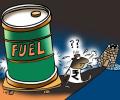
India must be prepared for a big, fat fuel import bill in FY23 - barring any further avatars of the Covid virus - as refiners crank up runs, or crude processing rates, to meet the growing demand for fuels, and crude prices soar. Capacity additions by an Indian state-run refiner will reinforce the need for foreign crude. Demand for all fuels is expected to increase by 3-8 per cent next fiscal from 2021-22, reaching pre-pandemic levels, according to analysts and industry experts.

The spike in food prices at the onset of the monsoon season has corroborated the Reserve Bank of India's (RBI's) view that the fight against inflation is far from over, the State of the Economy report of the central bank said. At the same time, the report said that the country is poised to become the fastest-growing major economy in the world, notwithstanding some sequential moderation in economic activity in June. Consumer Price Index (CPI)-based inflation rate increased to 4.8 per cent in June 2023, from 4.3 per cent in May, primarily on account of an increase in food inflation.
Indian growth in the rest of this fiscal year and next will be propelled by robust domestic consumption as consumer confidence improves, and by investment, including large increases in government capital expenditure, according to the Asian Development Outlook September 2023. "As slowing exports could foment headwinds for the economy, and erratic rainfall patterns are likely to undermine agricultural output, the growth forecast for FY2023 is revised down marginally to 6.3 per cent," ADB said.

Air India Express along with SpiceJet and Jet Airways is one of the three main targets for Boeing in the country as it promotes its new 737 MAX aircraft, which is scheduled to enter commercial operations in 2017.

According to industry experts, the consumption of petroleum products in the month of April was only 30-40 per cent of what it had been prior to the lockdown. Due to this, refineries were forced to bring down their capacity too.

'The classic thing we need as a country is the virtuous cycle where you have robust demand which leads to more capital spending which in turn leads to more job creation and more money in the hands of people.'

The current slowdown has lasted for over 18 months and is the longest incident of sluggishness since 2006.

The Railways could tie up with technical institutions for introducing railway-oriented subject for graduation and skill development.

Opposition members in the Lok Sabha on Monday blamed the Bharatiya Janata Party-led central government's policies for the price rise and accused it of ignoring the plight of common people, saying kitchens will soon "see a lockdown" if the Centre does not take corrective measures.

The dreary, cold months from December to February may prove to be the undoing of many a nation as they grapple with sky-high fuel prices - a result of the Ukraine conflict and the pandemic. Many - Europe, South Korea, Japan, and China - will still pull through on the strength of their wealth or because of strong storage infrastructure. But India will have its back to the wall. Signs of liquefied natural gas (LNG) rates hitting new records this winter are already evident.

SpiceJet on Monday launched discounted ticket sales at 'rates cheaper than AC 2-Tier train fare.

While India won't be immune to global spillovers, we need to create the macro preconditions for sustained growth. Policy agility, prudence, and resilience will be key, suggests Sonal Varma.

India on Wednesday asserted that its energy purchases from Russia remain 'minuscule' in comparison to its total consumption and that legitimate energy transactions cannot be politicised as energy export from Russia are yet to be sanctioned. The world's third-biggest oil-consuming and importing nation has in recent weeks snapped few cargoes available from Russia at deep discounts as part of its plans to diversify its import basket. These purchases have been commented upon.

The growth, however, may not indicate a major revival of economic activity.
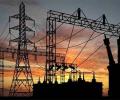
The monthly electricity bills of the majority of domestic consumers in Delhi -- who use more than 200 units and up to 600 units -- will be hiked by up to Rs 265 due to an increase in the power purchase adjustment cost (PPAC) levied by discoms in the city, officials said on Monday.

India is now much ahead of other large railway networks in the world in terms of electrification -- with the US at just 1 per cent, China at 72 per cent and Europe at 60 per cent.

The mission has been extended by another six months due to surplus fuel
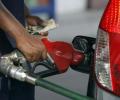
A looming global shortage of diesel in Europe presents India with more than one opportunity to profit from strong margins. A shortage of the fuel, a key contributor to inflation, has been exacerbated by the conflict in Ukraine, and western sanctions on Russian fuel supplies. The slowdown in natural gas supply means the West needs diesel to heat their homes this winter.

The mileage of the SUV is 19.72 kmpl.

The biggest headwind to the consumption story in FY23 is a sharp decline in government subsidies on food, fertiliser and fuel, and overall decline in revenue expenditure net of interest payments. This, analysts say, will adversely impact purchasing power of households at the lower end of the income pyramid, translating into lower spending on consumer goods and services.

A careful reading of the national income accounts suggests that after a strong recovery from the pandemic, there has been a significant ebbing of dynamism over the last three quarters to more modest levels recently, note Arvind Subramanian and Josh Felman.

Use of 10 per cent ethanol-blended petrol has led to a saving of over Rs 41,000 crore in the foreign exchange for the country, minister of state for environment, forest and climate change Ashwini Kumar Choubey said on Wednesday. Speaking at an online event of auto industry body SIAM on sustainable mobility, the minister said the government is working in multiple ways to encourage sustainable mobility. "India recently achieved 10 per cent ethanol blending target 5 months in advance, saving over Rs 41,000 crore worth of fuel imports for the nation," Choubey noted.

Finance Minister Nirmala Sitharaman on Tuesday said there were visible signs of revival in the economy but the GDP growth may be in the negative zone or near zero in the current fiscal.

Fast-moving consumer goods (FMCG) sales continued to be lower in June compared to May with urban sales witnessing a steeper decline than rural. Sales of goods from shampoos to biscuits stayed lower due to inflationary pressures on commodities. This pushed consumer companies to continue taking price hikes, thus impacting demand, according to data by Bizom.

Economic stagnation is the advance payment for polarisation, which extracts a terrible price.

UltraTech Cement's results for the fourth quarter results of the 2022-23 financial year (Q4FY23) were broadly in line with the Street estimates. The consolidated revenue, operating profit and net profit stood at Rs 18,700 crore, Rs 3,300 crore and Rs 1,670 crore, respectively, which were up 18 per cent, 8 per cent and 13 per cent YoY, respectively.

The move to implement a proposal of star ratings on passenger vehicles, similar to those seen on electrical appliances, is likely to be delayed by several months. Stakeholders from the automobile sector and the government are divided over key facets.

'There will be a series of rate hikes, but the pace and quantum will depend on how the economy in the US and the rest of the world behave.'

The Union government will gain close to Rs 1.6 lakh crore in additional revenues this fiscal from a record hike in excise duty on petrol and diesel that has pushed the total incidence of taxation on auto fuels to 70 per cent of the price. Late on Tuesday evening, the government hiked excise duty on petrol by Rs 10 per litre and that on diesel by Rs 13 a litre to mop up gains arising from international oil prices falling to a two-decade low.

The finance ministry on Tuesday cited "green shoots" of recovery in agriculture, manufacturing and services sectors, and said the prompt policy measures taken by the government and RBI have helped reinvigorate the economy with minimal damage. Stating that the agricultural sector remains the foundation of the Indian economy, the ministry said that a normal monsoon, as has been forecast, should support the rebooting of economy.
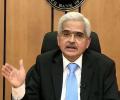
With inflation under control, the Monetary Policy Committee's (MPC's) job is to support growth because the economy had recovered well from the lows in the initial months of the pandemic, according to the panel's members, who met in the first week of this month. The minutes of the meeting show the Reserve Bank of India (RBI) governor in his statement said: "Given the sharp moderation in inflation along with a stable near-term outlook, monetary policy needs to continue with the accommodative stance to ensure that the recovery gains greater traction and becomes broad-based." Ashima Goyal, external member of the MPC, said: "The current macroeconomic configuration and its expected future evolution imply there is space for the MPC to continue to support the revival of the economy with inflation remaining in the target band."
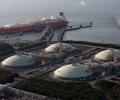
Around 15 years ago, when Reliance Industries (RIL) struck natural gas in the Krishna-Godavari (KG) basin off the east coast, the government made plans to supply that fuel cheaply to scores of generators that sprang up in India triggered by the discovery. Most of the plants, which account for 6 per cent of India's total generation capacity, operate sparsely after the KG-D6 area first failed to meet production targets, and then finally shut shop. Affordable domestic gas was why those thermal plants came up and the rate of the fuel today is why those generators hardly operate. Record liquefied natural gas (LNG) rates may yet again unravel India's ambitions to expand use of gas in industries, households and vehicles. Rates, while volatile, may stay strong this decade as developed nations with higher purchasing power embrace gas as the transition fuel.

'When you need to revive the economy, when you need to revive aggregate demand, you cut taxes.' 'But what's this government doing?' 'It's increasing taxes for the middle class and the vast majority of the poor on fuel, which has a ratchet effect on most other products.'

Reliance Industries Ltd on Friday reported a 15 per cent drop in its net profit to Rs 15,792 crore for the third quarter, according to a company's stock exchange filing. The net profit of Rs 15,792 crore in October-December 2022 compares to Rs 18,549 crore a year back.
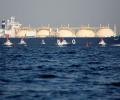
The government should bring natural gas under the Goods and Services Tax (GST) regime to realise Prime Minister Narendra Modi's vision for a gas-based economy and raising the share of the environment-friendly fuel in India's energy basket, an industry body that represents the likes of Reliance Industries as well as state-owned firms, has said. Natural gas is currently outside the ambit of GST, and existing legacy taxes -- central excise duty, state VAT, central sales tax -- continue to be applicable on the fuel. In its pre-Budget memorandum to the finance ministry, Federation of Indian Petroleum Industry (FIPI), which boasts of members from across the oil and gas spectrum, also demanded rationalisation of GST on transportation of natural gas through pipeline as well as on re-gasification of imported LNG to help bring down cost of the environment friendly fuel.

After bumbling for years since 2014, the Modi government seems to believe that massive government expenditure will lead us to prosperity supported by 'seat-of-the-pants' decision-making, observes Debashis Basu.

An $1 per barrel change in crude price impacts the net import bill by Rs 3,513 crore.

'The JF-17 is the aircraft of today and the Tejas is the aircraft of tomorrow.'

The government on Thursday allowed free inter-state wheeling of renewable energy used in the production of green hydrogen and ammonia as it seeks to boost usage of the carbon-free fuel and make India an export hub. Unveiling the first part of the much-awaited National Hydrogen Policy, Power and New and Renewable Energy Minister Raj Kumar Singh said the government is targeting production of 5 million tonnes of green hydrogen by 2030. Oil refineries to steel plants require hydrogen to produce finished products.

ArcelorMittal on Tuesday said it has cut expenditure on research and development by 4 per cent.
